Salesforce CRM pricing takes center stage as businesses navigate the world of customer relationship management. Dive into this comprehensive guide filled with insights and tips to make informed decisions for your organization.
Salesforce CRM Pricing Models
When it comes to Salesforce CRM pricing, there are several models available to cater to the diverse needs of businesses. Let’s explore the different pricing structures offered by Salesforce CRM and how they can benefit various types of organizations.

Standard Pricing Model
The standard pricing model of Salesforce CRM is based on a per user, per month subscription fee. This model is ideal for small to medium-sized businesses that require basic CRM functionalities without the need for extensive customization.
- Example: A startup company with a small team that needs a user-friendly CRM system to manage customer data and track sales activities.
Enterprise Pricing Model
The enterprise pricing model of Salesforce CRM is tailored for larger organizations with more complex CRM requirements. It offers additional features, customization options, and support services, making it suitable for businesses with a larger user base and more sophisticated needs.
- Example: A multinational corporation with multiple departments and a large sales team that needs a highly customizable CRM solution to streamline processes and improve customer interactions.
Unlimited Pricing Model
The unlimited pricing model of Salesforce CRM is designed for organizations that require unlimited access to advanced features, extensive customization capabilities, and premium support services. This model is ideal for enterprises with high-volume data processing needs and a large number of users.
- Example: A financial institution with thousands of employees across multiple locations that need a robust CRM platform to handle large datasets, complex workflows, and integrated communication channels.
Factors Influencing Salesforce CRM Pricing
When it comes to determining the pricing of Salesforce CRM, several key factors come into play. These factors can significantly impact the overall cost of implementing and using the CRM system. Let’s delve into the main aspects that influence Salesforce CRM pricing.
Features and Functionalities
The features and functionalities offered by Salesforce CRM play a crucial role in determining the pricing tiers. More advanced features such as AI-driven analytics, automation tools, customization options, and integrations with other systems can drive up the cost of the CRM. Organizations looking for a comprehensive solution with a wide range of functionalities can expect to pay more for these advanced features.
Scalability and Customization Options
The scalability and customization options provided by Salesforce CRM also impact the pricing structure. Scalability refers to the ability of the CRM system to grow and adapt to the changing needs of the business. As organizations expand and require additional users, storage, or functionality, they may need to upgrade their Salesforce CRM plan, leading to higher costs. Similarly, the level of customization available in the CRM platform can affect pricing. Organizations that require extensive customization to tailor the CRM to their specific business processes may incur additional costs for these customization options.
Hidden Costs in Salesforce CRM Pricing
When considering Salesforce CRM pricing, it’s essential to be aware of potential hidden costs that may not be initially obvious. These additional expenses can impact your budget and overall implementation strategy. Here, we will explore common hidden costs associated with Salesforce CRM and provide tips on how to manage them effectively.
Add-On Expenses to Consider
While Salesforce CRM pricing packages may seem comprehensive, there are often add-on expenses that customers should be aware of. These can include:
- Customization and integration costs
- Training and support fees
- Data migration expenses
- Third-party app costs
Budgeting Tips for Salesforce CRM Implementation
Effective budgeting is crucial when implementing Salesforce CRM to avoid unexpected costs. Consider the following tips:
- Conduct a thorough needs assessment to determine necessary features
- Allocate a contingency fund for unforeseen expenses
- Regularly review and adjust your budget as needed
Negotiating Pricing with Salesforce
When discussing pricing with Salesforce, consider negotiating to potentially reduce hidden costs. Strategies for negotiation include:
- Highlighting your long-term commitment to the platform
- Requesting bundled services for a lower overall cost
- Seeking discounts based on your organization’s size or industry
Identifying Unnecessary Add-Ons
It’s essential to identify unnecessary add-ons and features that can contribute to increased expenses. To avoid overspending, consider the following strategies:
- Regularly review your usage and assess the value of each add-on
- Consult with Salesforce experts to determine if certain features are essential for your business
- Implement a process for evaluating and eliminating unused or redundant features
Salesforce CRM Pricing for Small Businesses
When it comes to small businesses, affordability is a key factor in deciding whether to invest in a CRM system like Salesforce. Let’s analyze how small businesses can make the most out of Salesforce CRM within their budget constraints.
Cost-Effective Strategies for Small Businesses to Leverage Salesforce CRM
Implementing Salesforce CRM doesn’t have to break the bank for small businesses. Here are some cost-effective strategies to help them leverage the benefits of Salesforce CRM:
- Start with a basic plan: Small businesses can begin with a basic Salesforce CRM plan and gradually scale up as their needs grow.
- Utilize free resources: Salesforce offers a range of free resources, such as training materials and webinars, that small businesses can take advantage of to enhance their CRM capabilities without additional costs.
- Customize selectively: Instead of investing in extensive customization, small businesses can focus on essential customizations that align with their specific requirements to keep costs in check.
- Opt for annual billing: Opting for annual billing can often lead to cost savings compared to monthly subscriptions.
Success Stories of Small Businesses that Have Benefited from Salesforce CRM
Many small businesses have successfully implemented Salesforce CRM and seen significant improvements in their operations and customer relationships. Here are some inspiring success stories:
- A small e-commerce startup saw a 30% increase in sales within the first year of implementing Salesforce CRM, thanks to improved customer segmentation and targeted marketing campaigns.
- A local service provider streamlined their communication processes and reduced response times by 50% after integrating Salesforce CRM, leading to higher customer satisfaction and retention rates.
- A family-owned retail business improved inventory management and order tracking accuracy by 20% after adopting Salesforce CRM, resulting in reduced operational costs and increased productivity.
Enterprise-Level Salesforce CRM Pricing
Enterprise-level Salesforce CRM pricing caters to the needs of large organizations with complex requirements. These pricing structures are designed to accommodate the scale and sophistication of enterprise operations, offering tiered pricing based on the number of users and features included.
Scalability and Flexibility
Enterprise-level Salesforce CRM solutions provide scalability options that allow organizations to easily add or remove users as needed. They also offer the flexibility to upgrade or downgrade plans based on changing requirements. This ensures that enterprises can adapt their CRM system to meet evolving business needs efficiently.
- Advanced Customization Options: Enterprises can access advanced customization features for tailoring the CRM system to their specific workflows and processes. However, these customizations may come at an additional cost, depending on the complexity of the requirements.
- Integration Capabilities: Salesforce CRM for large enterprises often includes robust integration capabilities to connect with other enterprise systems and tools seamlessly. Integration features may be priced based on the number of integrations or the complexity of the connections.
- Dedicated Support Services: Enterprise users typically benefit from dedicated support services to address their unique challenges and requirements. These premium support services may be included in the pricing or offered as an add-on with associated costs.
On-Premise vs. Cloud-Based Solutions
Enterprise clients can choose between on-premise and cloud-based Salesforce CRM solutions, each with its pricing model. On-premise solutions may involve higher initial setup costs and ongoing maintenance expenses, while cloud-based solutions offer more flexibility and scalability with subscription-based pricing.
It is essential for enterprises to evaluate their specific needs and IT infrastructure before deciding between on-premise and cloud-based Salesforce CRM solutions.
Negotiating Custom Pricing Packages
Enterprises seeking Salesforce CRM solutions can negotiate custom pricing packages tailored to their specific requirements. This may involve volume discounts for large user counts, special contractual terms for extended commitments, or bundled services at a discounted rate. Negotiating custom pricing allows enterprises to optimize costs while maximizing the value derived from their CRM investment.
Customization Costs in Salesforce CRM
When it comes to customizing Salesforce CRM to align with specific business needs, there are various costs involved that can impact the overall pricing structure. Understanding these costs and best practices for optimizing them is crucial for maximizing the benefits of Salesforce CRM.
Types of Customization Costs
- Consulting Fees: Hiring experts to assess your requirements and implement customizations can incur consulting fees.
- Development Costs: Building custom applications, workflows, or reports within Salesforce CRM involves development costs.
- Training Expenses: Training your employees on the customized features of Salesforce CRM can add to the overall customization costs.
- Licensing Fees: Some advanced customization options may require additional licensing fees.
Estimating Customization Budget
Before embarking on customization projects, it’s essential to estimate the budget required accurately. This involves analyzing the scope of customization, consulting with experts, and considering any potential hidden costs.
ROI of Customization in Salesforce CRM
Investing in customization for Salesforce CRM can lead to a significant return on investment by improving efficiency, user adoption, and overall business performance. Calculating the potential ROI of customization projects is essential for making informed decisions.
Optimizing Customization Costs
- Prioritize Features: Identify critical customization features based on your business requirements to avoid unnecessary expenses.
- Iterative Approach: Implement customizations in phases to spread out costs and ensure alignment with evolving business needs.
- User Involvement: Engage end-users in the customization process to ensure that the solutions meet their needs and reduce rework costs.
Successful Customization Projects
Several organizations have successfully customized Salesforce CRM to enhance productivity, streamline processes, and drive growth. Examples include integrating third-party applications, automating lead management, and creating personalized dashboards for real-time insights.
Salesforce CRM Implementation Costs
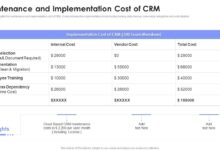
Implementing Salesforce CRM involves various costs that organizations need to consider. From consulting fees to training expenses, understanding the breakdown of these costs is crucial for effective budget planning and successful implementation.
Consulting Fees
- Consulting fees are a significant part of Salesforce CRM implementation costs. Organizations often hire external consultants to assist with the setup, customization, and integration of the CRM system.
- Consultants may charge hourly rates, project-based fees, or retainer fees, depending on the scope of work and expertise required.
- It is essential to carefully evaluate and compare consulting fees from different providers to ensure cost-effectiveness and quality service delivery.
Training Expenses
- Training expenses are another essential component of Salesforce CRM implementation costs. Proper training ensures that employees can effectively use the CRM system to its full potential.
- Training costs may include instructor-led sessions, online courses, training materials, and certifications for administrators and end-users.
- Organizations should allocate a budget for comprehensive training programs to maximize ROI and user adoption of the CRM system.
Minimizing Implementation Costs
- To minimize implementation costs without compromising quality, organizations can leverage in-house resources for certain tasks, such as data migration, basic customization, and user training.
- By strategically combining external consulting services with internal expertise, organizations can optimize costs while ensuring a successful implementation process.
- Effective project management, clear communication, and regular progress monitoring are key strategies for controlling implementation costs and timelines.
Hidden Costs
- Hidden costs in Salesforce CRM implementation often include additional customization requirements, unforeseen data migration challenges, and post-implementation support needs.
- Organizations should conduct thorough planning and risk assessment to identify potential hidden costs and mitigate them proactively.
- Creating a contingency budget for unexpected expenses can help organizations manage hidden costs effectively and prevent budget overruns during implementation.
Budget Allocation for Maintenance and Updates
- Allocating a budget for ongoing maintenance and updates post-implementation is crucial for the long-term success of the Salesforce CRM system.
- Maintenance costs may include software upgrades, bug fixes, security enhancements, and user support services to ensure the CRM system remains efficient and up-to-date.
- Regularly reviewing and adjusting the maintenance budget based on evolving business needs and technology advancements is essential for maximizing the value of Salesforce CRM over time.
Salesforce CRM Renewal and Upgrade Pricing
When it comes to renewing your Salesforce CRM subscription or upgrading to a higher-tier plan, there are important factors to consider in terms of pricing.
Renewing Salesforce CRM Subscriptions
Renewing your Salesforce CRM subscription typically involves signing up for another term of service with the platform. The pricing structure for renewal often depends on the initial agreement you had in place and any changes in pricing that may have occurred since your last renewal. It’s important to review your contract and reach out to your Salesforce representative to understand the renewal costs.
Upgrading to Higher-Tier Plans
If you are looking to upgrade to a higher-tier plan within Salesforce CRM, you can expect additional costs associated with the enhanced features and capabilities of the new plan. The pricing for upgrades is usually based on the difference between your current plan and the upgraded plan. Make sure to assess the value of the new features against the cost increase to determine if the upgrade is worthwhile for your business.
Negotiating Renewal and Upgrade Pricing with Salesforce
When it comes to negotiating renewal and upgrade pricing with Salesforce, it’s essential to be prepared with data on your usage, needs, and budget constraints. Approach the negotiation with a clear understanding of the value you are getting from the platform and be willing to discuss your options with your Salesforce account manager. By demonstrating your commitment to the platform and exploring different pricing options, you may be able to secure a more favorable renewal or upgrade deal.
Salesforce CRM Cost-Benefit Analysis
Implementing Salesforce CRM can have a significant impact on businesses, both in terms of cost and benefits. Conducting a thorough cost-benefit analysis is crucial to evaluate if the investment in Salesforce CRM is worthwhile.
Costs vs. Benefits
When comparing the costs of implementing Salesforce CRM with the benefits it provides, businesses need to consider various factors. The initial cost of licensing, customization, and implementation should be weighed against the potential benefits of increased productivity, efficiency, and customer satisfaction.
- Costs:
- Licensing fees
- Customization costs
- Implementation costs
- Training expenses
- Maintenance and support fees
- Benefits:
- Improved customer relationship management
- Enhanced sales and marketing efforts
- Increased operational efficiency
- Better data management and analytics
- Scalability and flexibility for business growth
It is essential for businesses to analyze the tangible and intangible benefits that Salesforce CRM can bring, along with the associated costs, to determine the overall return on investment.
ROI Framework
Developing a framework to evaluate the return on investment (ROI) of Salesforce CRM implementation is key to making informed decisions. Businesses can consider factors such as:
- Quantifiable benefits: Measurable improvements in sales, customer retention, and operational efficiency.
- Cost savings: Reduction in manual tasks, improved resource allocation, and streamlined processes.
- Intangible benefits: Enhanced customer satisfaction, brand reputation, and competitive advantage.
- Long-term value: Scalability, adaptability, and future-proofing of the CRM solution.
By conducting a comprehensive cost-benefit analysis and evaluating the ROI framework, businesses can determine the value and impact of implementing Salesforce CRM on their operations and overall success.
Salesforce CRM Pricing Transparency
When it comes to evaluating the transparency of Salesforce CRM pricing policies, customers may encounter some challenges in understanding the full cost breakdown. While Salesforce CRM does provide detailed pricing information on their website, there are still some aspects that may not be immediately clear to potential buyers.
Breakdown of Pricing Tiers
- Basic: Includes essential CRM features at a lower cost.
- Professional: Offers more advanced features for growing businesses.
- Enterprise: Designed for larger organizations with complex needs.
- Unlimited: Provides unlimited access to all features for maximum flexibility.
Additional Costs for Add-On Features
- Customizations: Additional fees may apply for customizing the CRM to fit specific business requirements.
- Integration: Costs for integrating Salesforce CRM with other systems or applications.
Billing Cycle Options
Customers can choose between monthly or annual billing cycles for Salesforce CRM subscriptions. Annual plans often come with discounts compared to monthly payments.
Requesting Customized Pricing Quote
Customers can reach out to Salesforce CRM sales representatives to request a customized pricing quote based on their specific needs and requirements.
Negotiating Pricing Strategies
- Bundle services: Inquire about bundling services to potentially lower overall costs.
- Highlight value: Emphasize the value Salesforce CRM will bring to your organization to negotiate better terms.
Comparing Pricing Transparency
When comparing Salesforce CRM pricing transparency with other CRM providers, it’s essential to consider how clear and detailed the pricing structures are across the board. Look for hidden fees or unclear pricing structures that could impact your overall budget.
Salesforce CRM Pricing Competitor Analysis
In the competitive landscape of CRM solutions, it is essential to compare Salesforce CRM pricing with its competitors to understand the market dynamics and customer preferences.
Key Differences in Pricing Strategies
When comparing Salesforce CRM pricing with its competitors, key differences in pricing strategies often revolve around the pricing structure, feature offerings, and scalability options. Salesforce may focus on a subscription-based model with tiered pricing plans, while competitors might offer more flexibility in pricing options or bundled services.
Features and Services Comparison
A detailed breakdown of the features and services included in the pricing plans of Salesforce and its competitors can reveal strengths and weaknesses in each offering. Understanding the value proposition of each CRM provider is crucial for customers making informed decisions.
Scalability and Additional Costs
Evaluating the scalability options and additional costs associated with each CRM provider’s pricing model is essential for businesses planning for growth. Some competitors may offer more cost-effective scalability options or include add-on services at a lower cost compared to Salesforce.
Customer Satisfaction and Feedback
Exploring customer reviews and feedback related to pricing satisfaction for Salesforce and its competitors can provide valuable insights into customer preferences and perceptions. Understanding how pricing competitiveness impacts customer choices in the CRM industry can help businesses tailor their offerings to meet market demands effectively.
Negotiation Strategies for Salesforce CRM Pricing
Negotiating pricing with Salesforce can be a crucial step in securing a cost-effective CRM solution for your business. Here are some tips and strategies to help you get the best deal:
Common Negotiation Tactics
- Do your research: Understand the pricing packages offered by Salesforce and compare them to industry standards.
- Highlight your value: Showcase how your business can benefit from Salesforce CRM and why you are a valuable customer.
- Bundle services: Consider bundling multiple Salesforce products or services to negotiate a better overall price.
- Ask for discounts: Don’t be afraid to ask for discounts or special promotions, especially if you are a long-term customer.
Success Stories
- Company XYZ negotiated a 20% discount on their Salesforce CRM subscription by committing to a multi-year contract.
- Small Business ABC secured additional training sessions and support hours at no extra cost by leveraging their relationship with their Salesforce account manager.
Preparation for Negotiation Meeting
Prepare a detailed list of your CRM requirements, budget constraints, and desired pricing terms to present during the negotiation meeting.
Sample Script for Pricing Negotiations
“Hello, I appreciate the opportunity to discuss our pricing options with Salesforce. Based on our research and business needs, we are hoping to explore potential discounts or customized packages that align better with our budget. Can we discuss how we can work together to find a solution that meets both our needs?”
Understanding Discounts and Promotions in Salesforce CRM Pricing
When it comes to Salesforce CRM pricing, understanding the discounts and promotions offered can significantly impact the overall cost for businesses. These special deals and limited-time offers can help organizations maximize cost savings and get the most value out of their CRM investment.
Discounts and Promotions by Salesforce
- Salesforce often provides discounts for new customers, especially during promotional periods like year-end sales or special events.
- Volume discounts are also common for businesses looking to purchase multiple licenses or add-on features.
- Nonprofit organizations and educational institutions may qualify for special pricing or discounts through Salesforce’s philanthropy programs.
- Upgrades and renewals may come with discounted rates, encouraging existing customers to continue their subscription.
Last Point
In conclusion, understanding Salesforce CRM pricing is crucial for optimizing your business operations and maximizing ROI. Stay informed, stay ahead, and watch your business thrive in the competitive landscape.
